Heard a tornado called an EF2 and not sure what that means? The enhanced fujita scale sorts tornadoes from EF0 to EF5 using wind speeds that surveyors estimate from damage, not from direct measurements.
For the wider picture on storms, see our guide to severe weather safety.
| Item | Value |
|---|---|
| Became operational | February 1, 2007 |
| Rating range | EF0 to EF5 |
| EF0 wind estimate | 65-85 mph (3-second gust) |
| EF5 wind estimate | Over 200 mph (3-second gust) |
| Damage indicators used | 28 |
| Degrees of damage | 8 levels |
The figures come from the National Weather Service Norman, Oklahoma office’s EF Scale page. Scales and survey procedures can be revised, so check the source before you rely on them.
What the Enhanced Fujita Scale measures
The Enhanced Fujita Scale, or EF Scale, became operational on February 1, 2007. According to the National Weather Service (NWS) office in Norman, Oklahoma, it assigns a tornado a rating based on estimated wind speeds and related damage.
The key word is estimated. The NWS page says the EF Scale is still a set of wind estimates, not measurements, based on damage.
The wind figure is a three-second gust estimated at the point of damage. The same page notes that this is not the same wind as in standard surface observations, and that the estimates vary with height and exposure. So an EF rating and a weather station’s wind report are two different kinds of number.
EF ratings and wind speeds
The NWS Little Rock, Arkansas page lists ratings from EF0 at the weak end to EF5 at the violent end. The table pairs each gust range with the estimates the same page gives for the original Fujita Scale.
| Rating | Description | EF Scale gust | Original F Scale estimate |
|---|---|---|---|
| EF0 / F0 | Gale tornado | 65-85 mph | 40-72 mph |
| EF1 / F1 | Moderate tornado | 86-110 mph | 73-112 mph |
| EF2 / F2 | Significant tornado | 111-135 mph | 113-157 mph |
| EF3 / F3 | Severe tornado | 136-165 mph | 158-206 mph |
| EF4 / F4 | Devastating tornado | 166-200 mph | 207-260 mph |
| EF5 / F5 | Incredible tornado | Over 200 mph | 261-318 mph |
Both sets of ranges are listed on the NWS Little Rock, Arkansas Enhanced Fujita Scale page, so check it before you rely on them.
The two columns are not a conversion chart. The older estimates were often overestimated, especially for stronger tornadoes, which is one reason the scale was revised. An EF5 starts above 200 mph, while the original F5 was estimated at 261-318 mph.
How surveyors assign a rating
When tornado damage is surveyed, it is compared to a list of Damage Indicators (DIs) and Degrees of Damage (DoD). That comparison narrows the range of wind speeds the tornado likely produced, according to the NWS Norman page.
- Trained NWS personnel pick the damage indicator that matches the structure or object, from the list of 28.
- They match the observed damage to one of the 8 degrees of damage for that indicator.
- The evaluator judges whether the wind needed to cause that damage was higher or lower than the expected value, within an upper and lower bound.
- The process repeats for several structures, not just one.
- The highest rated indicator determines the rating for the tornado.
Construction quality matters at step three. The NWS Little Rock page explains that the better a structure was built compared to code, the higher the winds within the assigned rating.
The 28 indicators cover a wide range of things a tornado can hit:
- Small barns and farm outbuildings
- One- or two-family residences
- Strip malls
- Single-story elementary schools
- Transmission line towers
- Hardwood and softwood trees
In rural areas with no structures available, the NWS Little Rock page says trees, towers and light poles are used instead.
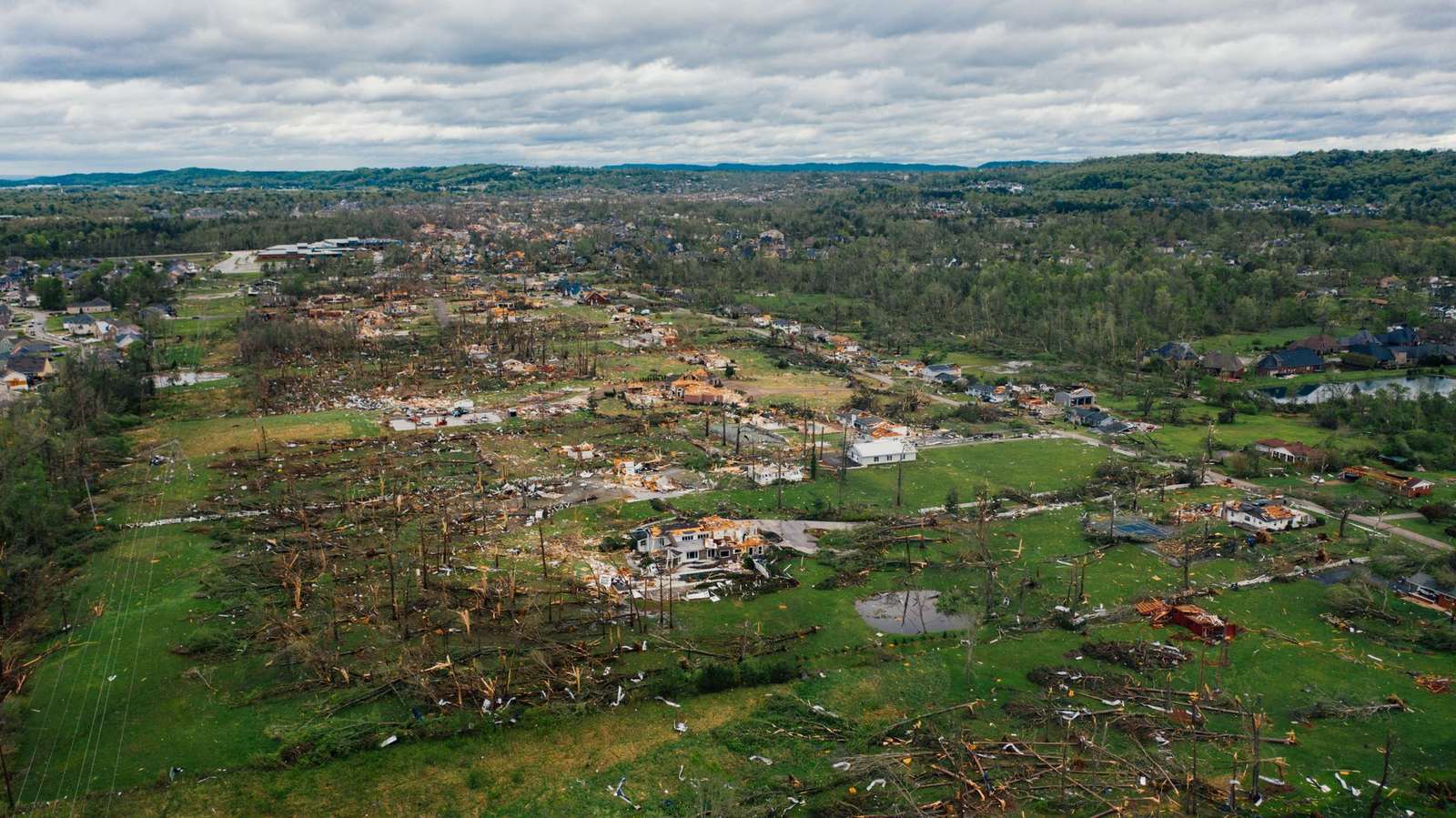
The Little Rock office gives a worked example. A family home loses most of its roof and some brick from the outer walls, but the walls are left standing, and the degree-of-damage guide gives expected winds of 122 mph.
If other indicators surveyed show similar results, that tornado would be rated EF2. That fits inside the 111-135 mph range for the category.
Why the scale replaced the original Fujita Scale
The original Fujita Scale was used as a guide from 1971, according to the NWS Little Rock, Arkansas page. It ran from F0 to F5, with estimated winds starting at 40-72 mph for F0.
The trouble was how structures were judged. The same page says little consideration was given to construction quality, so results were often based on appearance and the wind speeds were subject to bias.
A June 2004 recommendation from Texas Tech University lists the primary limitations of the old scale:
- A lack of damage indicators
- No account of construction quality and variability
- No definitive correlation between damage and wind speed
Work on a replacement began in 2001, pioneered by Texas Tech’s Wind Science and Engineering Center. A forum in Grapevine, Texas, on March 7-8, 2001, drew twenty of the 26 users invited, and the project team went on to propose 28 damage indicators.
The Texas Tech document also pushed back on the old wind figures. It says a 260 mph wind is not required to completely destroy a well constructed house, because the damage occurs at significantly lower wind speeds.
What an EF rating does not tell you
A rating arrives after the damage has been surveyed, so it cannot tell you when to take cover. In the moment, the alerts matter, and our explainer on watch vs warning weather shows how to read them.
It also is not a wind-gauge reading. Because the method reads damage, two similar-looking scenes can end up with different wind estimates if the buildings were built differently.
The aim is to assign a category based on the highest wind speed that occurred within the damage path. That is why surveyors look at several structures before settling on a final rating.
The same habit of checking official guidance applies in colder months, and our guide to winter storm preparedness covers that side of the year.
How should you read a tornado rating in the news?
A few quick checks keep the numbers in perspective:
- Treat the EF number as an estimate drawn from damage, not a measured wind.
- Remember the range: EF0 starts at 65-85 mph, and EF5 is anything over 200 mph.
- Keep in mind that the wind is a three-second gust, not the kind of wind a weather station reports.
- Do not match an old F rating directly to a new EF rating; the Texas Tech forum aimed to preserve the historical database, so the two systems sit side by side.
Frequently asked questions
What does EF stand for?
Show answer
EF stands for Enhanced Fujita. The NWS calls it the Enhanced Fujita Scale, or EF Scale.
Who assigns the rating?
Show answer
Trained NWS personnel survey the damage and compare it to the damage indicators and degrees of damage, according to the NWS Norman page.
What is the highest EF rating?
Show answer
EF5, which the NWS lists as winds over 200 mph.
Is an EF rating a measured wind speed?
Show answer
No. The NWS describes the EF Scale as a set of wind estimates, not measurements, based on damage.
What does the rating reflect within a tornado’s path?
Show answer
The goal is to assign a category based on the highest wind speed that occurred within the damage path, as stated on the NWS Norman page.