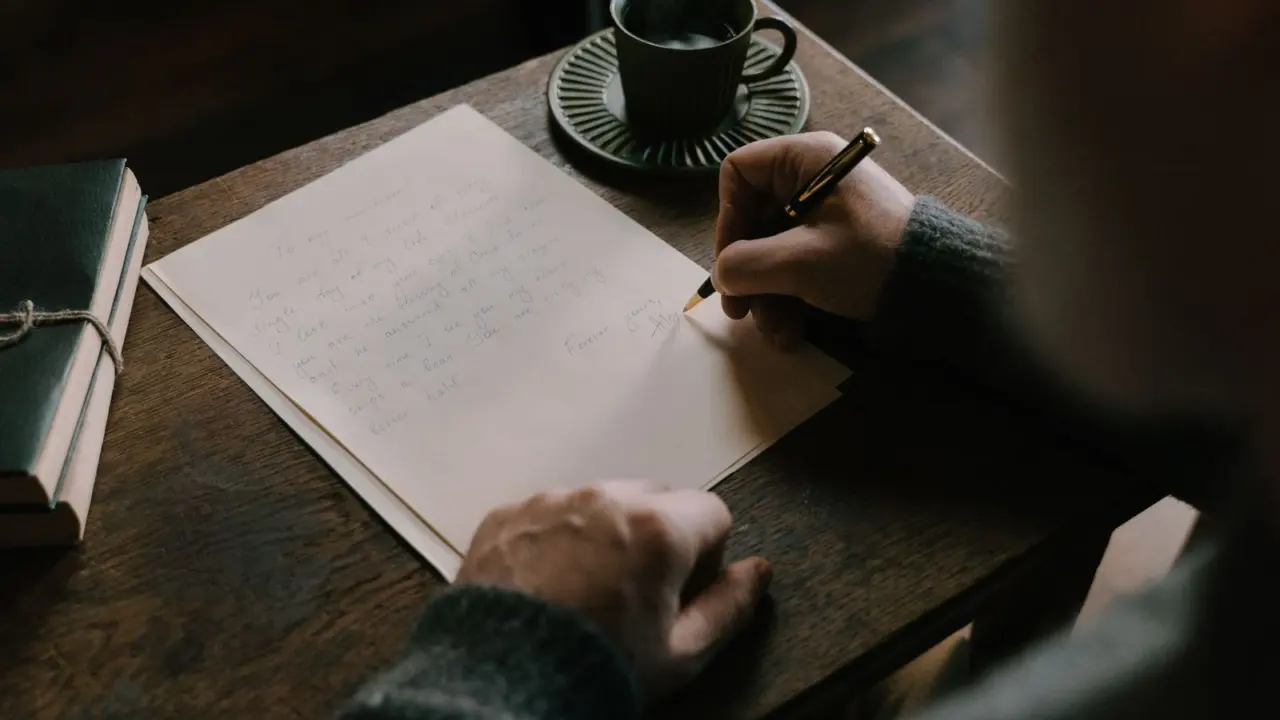
You have an opinion about your town and want it in print. Here is how to write a letter to the editor: respond to a specific story, make one point, stay under the word limit, and sign your real name.
Letters are one of the simplest ways to take part in local news, and the advice below draws on published newspaper policies.
| Item | Value |
|---|---|
| Sunday Telegraph (Nashua) letter limit | Up to 500 words |
| Sunday Telegraph guest column limit | Up to 750 words |
| Sunday Telegraph frequency limit | One published letter every 30 days |
| Typical newspaper maximum, per BU School of Public Health | 150-200 words |
| Suggested time to respond to an article | Within a week of publication |
The figures come from the Sunday Telegraph policy posted May 9, 2020 and the Boston University School of Public Health guidance. Newspaper rules can change, so check the source and the paper’s own page before you rely on them.
Start with a story or a local issue
A letter works best when it answers something readers have already seen. The Boston University School of Public Health advises you to begin by saying your letter responds to a specific article the newspaper published, then to recap the issue in one or two sentences, according to its letters guidance.
Some papers make this a rule. The student paper the Manitoban asks writers to include the headline and publication date of the article they are answering, and it says it gives priority to letters responding to material the paper has published, as its submission page explains.
Speed matters too. The same BU guidance says to aim to have your response written and submitted within a week of the original article, because a controversial topic fades once the next big story arrives (BU guidance).
Not every letter answers a news story. A neighbor’s letter in the Harvard Press, dated April 26, 2024, reacted to a planned fire department training burn set for May 4 and named the exact address it concerned. A local decision with a date attached gives an editor a reason to run your letter now.
How long should a letter to the editor be?
Shorter than you think. Word limits differ from paper to paper, so look up the one you are writing for before you draft. These published examples show the range:
- The Sunday Telegraph accepts letters up to 500 words, according to its policy dated May 9, 2020.
- The Albuquerque Journal says letters should be limited to 300 words, in guidance published March 2, 2025.
- Cowboy State Daily asks for letters under 500 words.
- The Manitoban says letters must be no more than 300 words.
- BU’s guidance says most news agencies set a maximum of 150-200 words, though letters are often edited to be shorter.
Treat the limit as a ceiling, not a target. Editors trim what runs long, and a tight letter is easier to print as written.
Space is tight for a reason. The Albuquerque Journal says it receives hundreds of letters and op-ed submissions a month and can publish only a limited number (Albuquerque Journal). If you wonder why print space is so scarce, the explainer on how do local newspapers make money covers the economics.

A simple structure for your letter
The BU guidance sums up the core rule in four words: focus on one strong argument. With limited space, pick the single point you most want a reader to remember (BU guidance). Then build the letter in this order:
- Reference. Name the article or issue in your first sentence and recap it briefly.
- Point. State your one argument plainly.
- Proof. Add a statistic, a study or a short personal experience. BU suggests any of these can reframe the argument in your favor.
- Language. Keep it simple and avoid jargon so the average reader follows you. Strong feeling is fine; sensational claims are not.
- Call to action. Close by telling readers or officials what you want done.
- Signature. Sign with your first and last name, and often your city.
The Harvard Press letter shows the last step well. It ended with a direct request that the planned burn be prohibited and was signed with the writer’s name and street (Harvard Press). Readers and editors could tell exactly what the writer wanted.
What editors check before they print
Editors confirm that a real person wrote the letter. The Sunday Telegraph requires the writer’s name, home address and day and night telephone numbers for confirmation, but publishes only the name and hometown (policy dated May 9, 2020). The Albuquerque Journal says a person will call to verify you submitted the letter before it can be considered (March 2025 guidance).
Papers also screen out certain kinds of letters. The Sunday Telegraph’s policy lists these:
- Anonymous letters, letters under an assumed name and letters with only initials.
- Form letters and letters written as part of a campaign.
- Letters that are not in good taste, are libelous or contain personal attacks or hate speech.
Those rules come from the same May 9, 2020 policy. Cowboy State Daily likewise asks that letters be constructive, with no back-and-forth personal arguments.
Your facts get checked as well. The Albuquerque Journal says letters will be fact-checked and edited before publication (Albuquerque Journal), and the Manitoban requires sources for all facts referred to in the letter. If your letter is about public safety, the guide on how to find local crime statistics points to where numbers you can cite come from.
Follow the format too. The Manitoban asks you to put the letter in the main body of the email, with no attachments, and says attachments will not be read (Manitoban).
What happens after you submit
Nothing is guaranteed. Cowboy State Daily says publication is not guaranteed and that editors reserve the right to edit for length, clarity and style (Cowboy State Daily).
Do not wait forever. The Manitoban tells writers that if they have not heard back after 7-10 days, they should assume the letter will not be published (Manitoban). If that happens, tighten the draft, add a better source or send it to another outlet.
Many papers also limit how often you can appear. The Sunday Telegraph limits writers to one published letter every 30 days (May 9, 2020 policy), and Cowboy State Daily says it will publish no more than one letter from the same reader within 30 days (Cowboy State Daily). Save your letter for the issue that matters most.
If you have more to say and real expertise, consider a longer piece. The Albuquerque Journal’s op-ed limit is 600 words, with authors asked not to submit more than one every 90 days, as of its March 2025 guidance. The Sunday Telegraph accepts guest columns of up to 750 words with a short biography (May 9, 2020 policy).
Frequently asked questions
How many words should a letter to the editor be?
Show answer
It depends on the paper. BU’s guidance says most news agencies set a maximum of 150-200 words, while the Albuquerque Journal says letters should be limited to 300 words. Check the paper’s own submission page first.
Can I send a letter anonymously?
Show answer
Usually not. The Sunday Telegraph does not publish anonymous letters as of its May 9, 2020 policy, and the Manitoban says anonymous letters or letters under pseudonyms will not be considered.
How soon should I respond to an article?
Show answer
BU’s guidance says to aim to submit within a week of the original article’s publication. Older topics are harder to place.
Does anyone read letters to the editor?
Show answer
The Albuquerque Journal says its letters are read by decision makers, city councilors and legislators, as stated in its March 2025 guidance. That is one paper’s claim, but it shows why a clear, specific request can matter.