
Not sure whether to call the county or the city? In county vs city government, counties are state-created administrative units covering larger areas, while cities run daily services like water, trash and policing.
Counties are created by the state, so it helps to know how state government works before comparing the two.
| Item | Value |
|---|---|
| County governments in the United States | 3,069 governments |
| Counties and county equivalents (statistical count) | 3,143 areas |
| Municipal governments (2012 census estimate) | Just over 19,500 governments |
| Township governments (2012 census estimate) | Nearly 16,500 governments |
| Basic types of county government | 3 types |
| Main models of city government | 2 models |
These figures come from the National Association of Counties and a Lumen Learning American Government text. Counts and structures can change, so check the source before you rely on them.
What a county government does
A county is a layer of government that sits between a city and the state. It covers a larger area than a city or town but a smaller one than the state, and the state creates it and usually sets its rules through the state constitution, as the Lumen Learning text explains.
Counties are one of America’s oldest forms of government. NACo dates the first county governments to 1634, along the eastern shores of Virginia, and counts 3,069 county governments today.
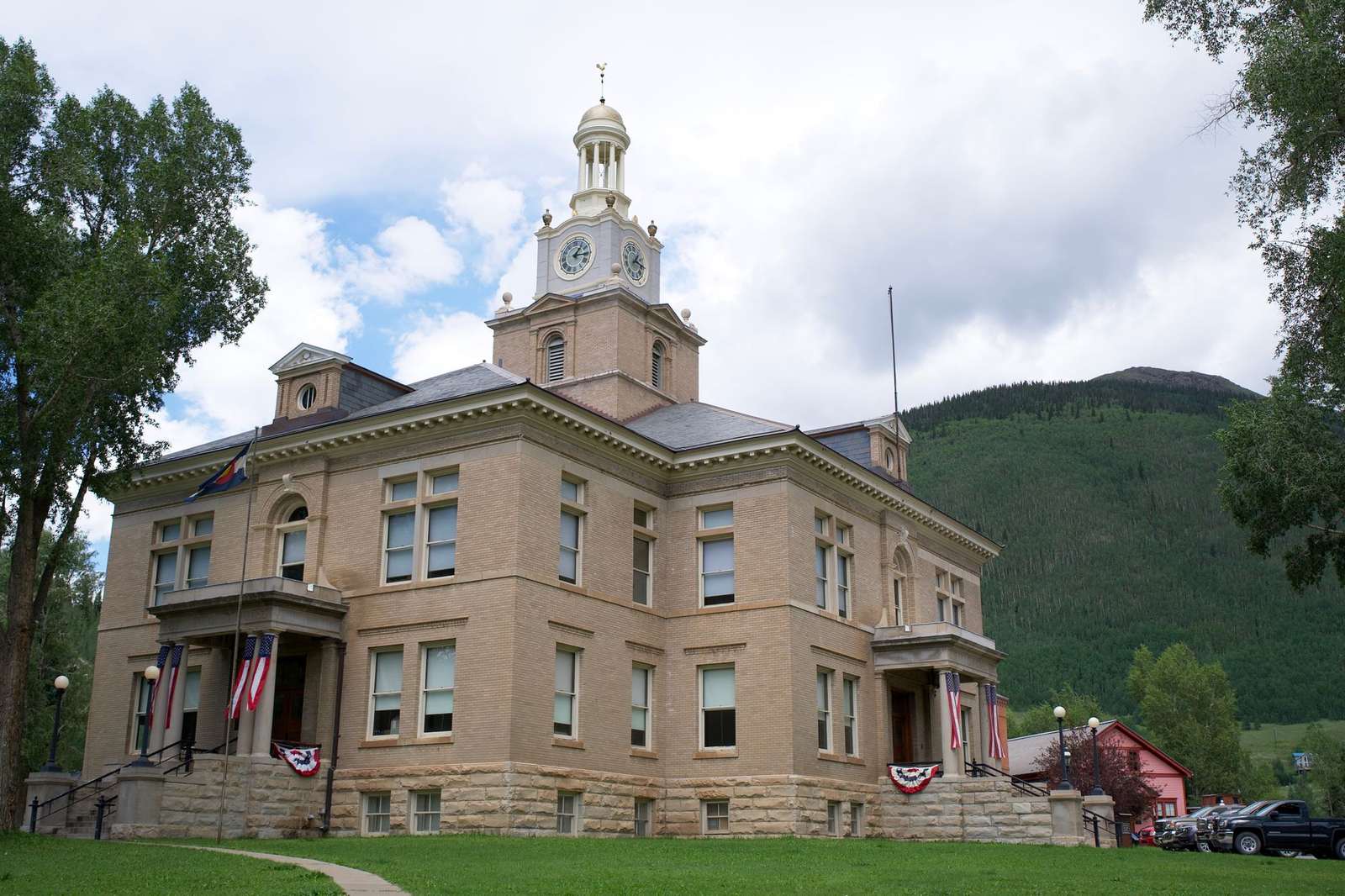
Most counties have a courthouse that houses a set of officials, though the exact tasks vary from state to state. The same text lists these typical roles:
- Sheriff: the county’s law enforcement official.
- County clerk: oversees voter registration, certifies county election results and typically keeps official birth, death and marriage records.
- Assessor: conducts property tax evaluations and tells owners they can contest the appraised value.
- Treasurer: oversees the collection and distribution of funds in the county.
- Coroner: investigates the cause of death when circumstances are suspicious.
- Engineer: oversees maintenance and construction of county infrastructure.
Counties also carry heavy infrastructure and health duties. According to NACo’s county roles page, counties own 45 percent of public road miles and 38 percent of bridges, and they manage and govern more than 1,900 local public health departments.
In short, counties help maintain roads, bridges, courthouses, jails, parks, libraries, hospitals and clinics. To pay for this, they typically rely on property tax revenue, a portion of sales tax receipts, and federal or state grants, per the Lumen text.
What a city government does
Municipal governments oversee the operation of cities and towns. Census estimates for 2012 show just over 19,500 municipal governments and nearly 16,500 township governments, according to Lumen Learning, so treat those counts as a dated snapshot.
City hall tends to handle the services you notice every day. The same source says municipal governments are responsible for:
- Clean water, sewage and garbage disposal.
- Maintaining city facilities such as parks, streetlights and stadiums.
- Zoning and building regulations.
- Promoting the city’s economic development.
- Law enforcement, public transportation and fire protection.
City budgets lean on a different mix of money than county budgets. Municipal governments typically rely on property tax revenue, user fees for trash collection and for water and sewer services, a portion of sales tax receipts, and taxes on business, Lumen Learning reports.
County vs city government: how leadership is organized
The two levels also differ in how their leaders are chosen and how power is divided. Neither is a copy of the other, and the structure often decides who actually signs off on a budget or a rule.
County systems usually take one of three basic forms, according to the Lumen text:
- Commission system: the most common form. A small elected commission acts as the governing body and performs all legislative and executive functions, including adopting a budget and hiring and firing county officials.
- Council-administrator system: voters elect council members, and the council appoints an administrator who can be terminated by the council.
- Council-elected executive system: voters elect both the council and an executive, who performs functions similar to a governor’s, such as vetoing council actions and drafting a budget.
Most city governments use one of two models, the same source says. In a mayor-council system, voters elect a mayor and a city council; the council makes laws and the mayor handles executive duties.
A strong mayor can veto council actions, appoint and fire department heads and produce a budget. A weak mayor has little authority and often serves as a spokesperson for the city.
In a council-manager system, the council appoints a city manager to carry out administrative work. That frees the council to focus on setting policy and shaping the budget.
When the line between city and county blurs
The neat picture of a county holding several cities does not fit everywhere. NACo’s county overview notes that its count of 3,069 county governments includes 42 city-county consolidations.
Names and structures change by state. In Louisiana a county is known as a parish, and in Alaska it is known as a borough, according to the same overview.
Some places have counties that exist mostly on paper. NACo reports that Connecticut abolished all county governments in 1960, and that Rhode Island has counties that exist only for judicial administration purposes.
Independent cities add another twist. Four states (Maryland, Missouri, Nevada and Virginia) have them, per NACo. Baltimore City and St. Louis City are considered county governments under their state constitutions, while the 38 independent cities in Virginia are designated only as incorporated areas under Virginia state law.
For statistics, the federal government’s reference list counts 3,143 counties and county equivalents, a wider total than the number of county governments. That gap is why you should check how your own state organizes local government before assuming anything.
Which office should you contact?
Start with the task, then check your state’s rules. These rules of thumb follow the roles described by the sources above:
- Water, sewer, trash, zoning and building rules: usually the city or town.
- Voter registration, vital records and election certification: usually the county clerk.
- Property tax appraisals and appeals: usually the county assessor.
- Suspicious deaths: usually the county coroner.
- Roads and bridges: could be either, since counties own a large share but cities maintain their own streets.
Because the tasks vary from state to state, a quick look at your county or city website will confirm who holds a given duty. If you need a case file rather than a county office, read how to find state court records before you call anyone.
Local offices are close by, and meetings are often nearby, yet voter turnout in local elections tends to be lower than in state and national elections, Lumen Learning notes. If a local question shows up on your ballot, this explainer answers the basics: how do ballot measures work?
Frequently asked questions
Is a county bigger than a city?
Show answer
Usually, yes. County governments serve a larger geographical area than cities and towns but a smaller area than a state, according to Lumen Learning.
Who pays for county and city services?
Show answer
Both rely on property tax revenue and a portion of sales tax receipts. Counties also lean on federal or state grants, while cities add user fees for services such as trash, water and sewer, plus taxes on business.
Does every state have working county governments?
Show answer
Not in the usual sense. In places such as Connecticut and Rhode Island, counties no longer work as full governments, so a county office may not exist for the task you have in mind. Check how your own state sets up local government first.
Who handles voter registration and birth records?
Show answer
In many places both sit with a county office rather than city hall. The exact desk varies by state, so look at your county’s website or call before you go in person.
What is a county equivalent?
Show answer
It is an area that counts as a county for statistical purposes, such as an unorganized area bearing a county designation, an independent city or the District of Columbia. NACo cites a federal reference total of 3,143 counties and county equivalents.